
Criminal Court Cases in Colquitt County
Colquitt County criminal cases do not all enter the same court. Superior Court hears felony trials. State Court handles misdemeanors and traffic cases, may issue warrants, and conducts preliminary felony proceedings. Magistrate Court handles warrants, preliminary matters, and minor criminal work. A city ordinance or traffic case may remain with Moultrie Municipal Court. The place of the alleged act and the level of the filed charge determine the custodian.
The Colquitt County Clerk of Court manages Superior, State, and Juvenile Court records from Room 214 of the courthouse at 9 South Main Street in Moultrie. The clerk holds pleadings, docket events, orders, judgments, and sentences. The jail does not replace that file. A booking charge records intake, while a prosecutor may amend, drop, or replace it before filing. Municipal records also should not be assumed to appear in the county felony portal.
Choose the Right Colquitt Court
A wrong-court search is the most common local trap. Start with the alleged offense and location, then match them to the court's role. Felony files belong in Superior Court. Most county misdemeanors belong in State Court. Warrants or early proceedings may originate in Magistrate Court. Moultrie ordinance and city traffic matters use the municipal channel.
The Georgia court jurisdiction guide explains these levels. The official image below shows that state guidance, which helps a reader avoid asking one clerk for another court's file.
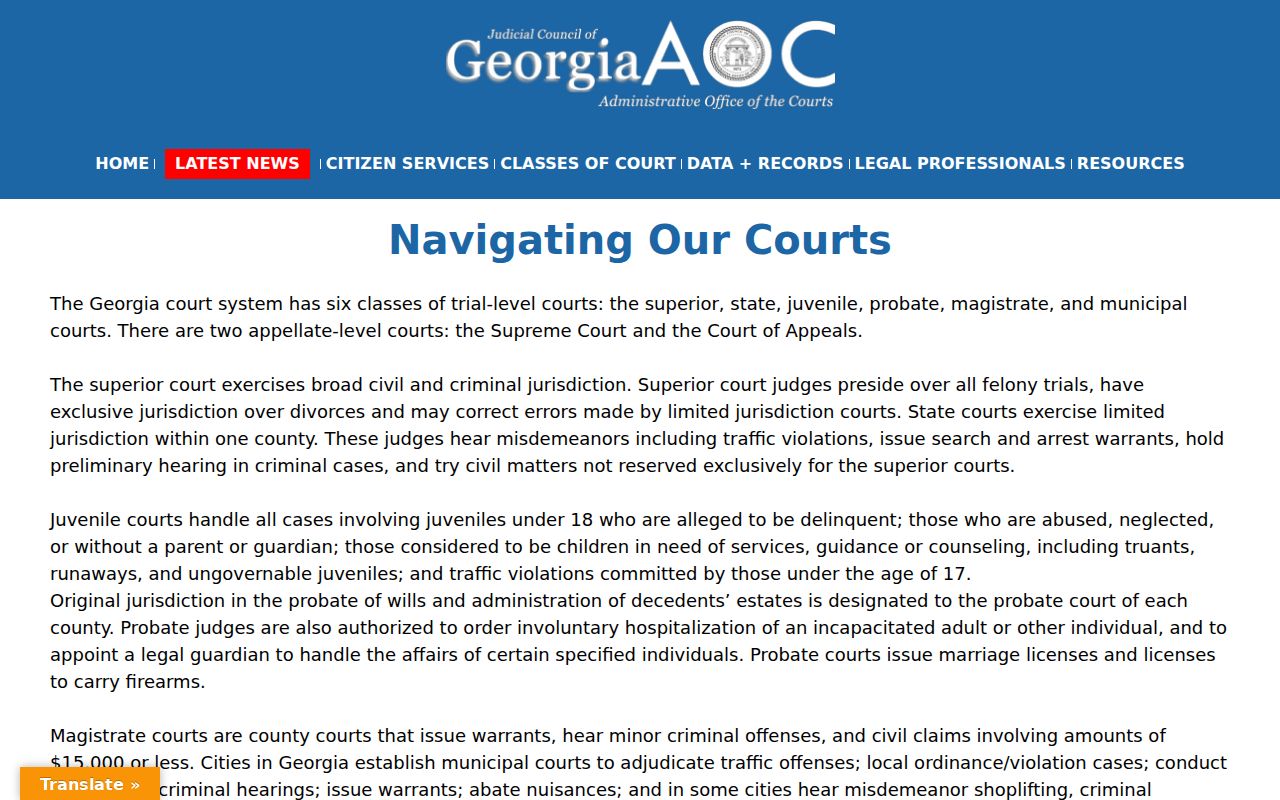
Once the court is known, carry the case number, filing year, and full party name into the next channel. Those identifiers reduce false matches and help staff locate paper or archived material.
Colquitt County Case Record Searches
The clerk links an Icon case portal, but its anonymous page exposes no case filters and requires credentials. Georgia Courts also routes State Court electronic work through PeachCourt. Neither route proves that every public document is remotely available. A known case number is the strongest key; otherwise use the court, party name, and likely filing year, then ask the clerk to confirm the match.
- Identify Superior, State, Magistrate, or municipal jurisdiction.
- Sign in to the clerk's authorized portal or the PeachCourt channel.
- Use a case number when known; otherwise provide name, court, and year.
- Read each charge and docket event, not only the case header.
- Request missing, archived, plain, or certified copies from the proper clerk.
| Field Label | Type | Required | Notes |
|---|---|---|---|
| Username | Text | Yes | The public Icon landing page begins with account credentials. |
| Password | Password | Yes | No anonymous Colquitt search fields were visible. |
| Case number | Record key | If known | Use it when contacting the clerk or searching authorized access. |
| Party and court | Request details | As needed | Helps distinguish similar names and route the request. |
| Filing year | Request detail | As needed | Useful for older or archived Colquitt files. |
PeachCourt and Colquitt Dockets
Georgia Courts identifies PeachCourt as the mandatory e-filing route for Colquitt State Court, but e-filing and public document access are not the same service. Registration asks for account details. A docket may identify that an event or document exists while the full image remains unavailable through the reader's access level.
The official PeachCourt registration page provides the account route used in this court system. Its screen appears below so readers can recognize the authorized provider rather than a people-search site.
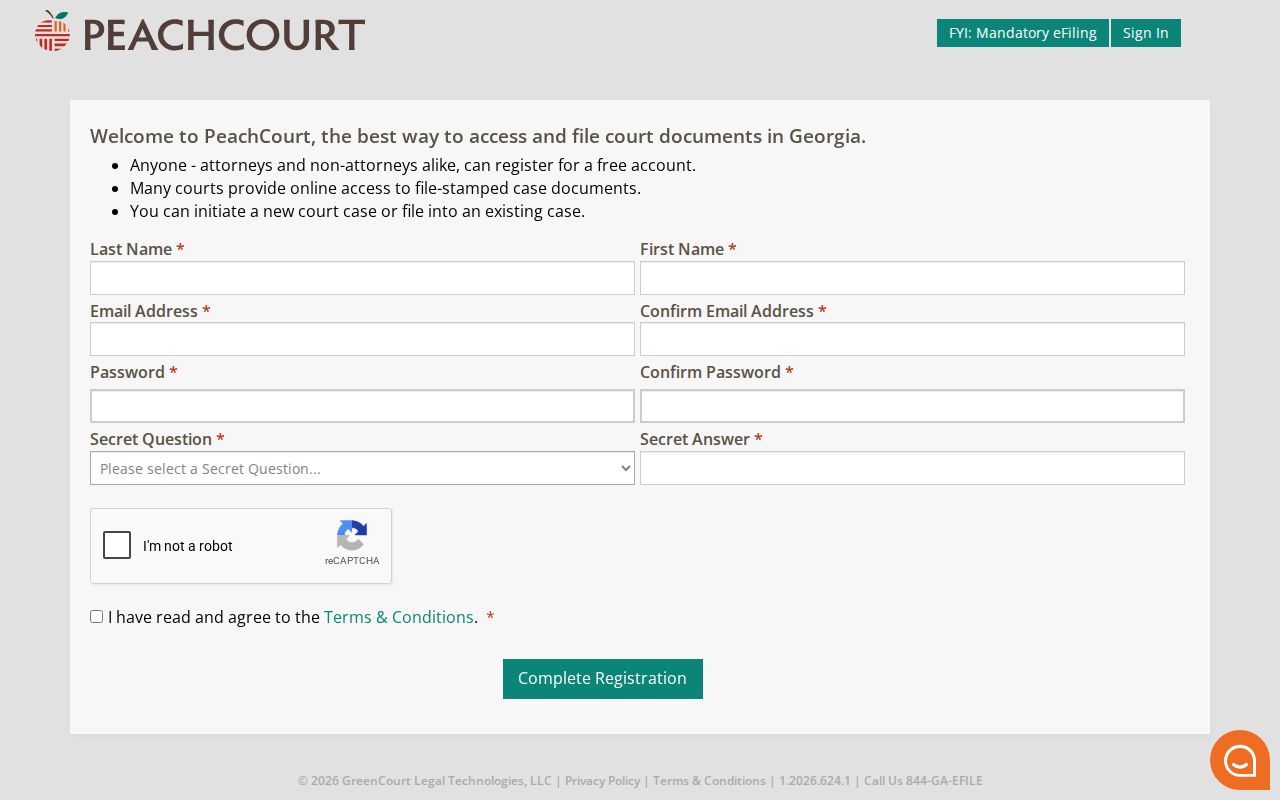
If a docket entry is visible but its document is not, note the case number, date, and docket label. Ask the clerk for that exact item and whether a plain or certified copy is needed.
What a Criminal Case File Contains
A Colquitt County criminal file records the prosecution, not merely the arrest. Read every count because one case can contain both dismissed and convicted charges. The charging paper may be an indictment, which comes from a grand jury, or an accusation filed by the prosecutor. A complaint can support the opening allegation or warrant but is not interchangeable with either charging document.
| Case Number & Court | Identifies the judicial file and the Colquitt court with custody. |
|---|---|
| Charging Document | Shows indictment, accusation, complaint, and filed counts. |
| Docket Entries | Chronological filings, motions, notices, orders, pleas, and calendar events. |
| Hearing Dates | Arraignment, motion, trial, plea, and sentencing settings when recorded. |
| Disposition & Judgment | The outcome of each count, including dismissal, acquittal, plea, or verdict. |
| Sentence & Conditions | Confinement, probation, restitution, and other court-ordered terms. |
Read Colquitt Dispositions by Charge
Georgia outcome codes can change the meaning of a case. DISM means dismissed. NPGJ means not presented to the grand jury, and NFAA means no further action anticipated; Georgia's published guidance treats both as dismissals. A no bill and a nolle prosequi also signal that the charge did not end in conviction. Nolo contendere is treated as a conviction in the state's criminal-history guidance.
First Offender needs a second look. An initial entry is treated as a conviction unless the record later shows successful discharge and exoneration. Mixed results are common enough that a case caption or top-line status cannot safely stand in for count-level review. For a correction to one's own GCIC history, request a certified disposition showing the exact court result and give it to the source agency responsible for the missing or wrong report.
Criminal Case Stages in Colquitt County
An arrest may start the local trail, but the prosecutor determines what to file. A felony can go to a grand jury for indictment. A misdemeanor often proceeds by accusation. Arraignment records a plea, followed by motions, discovery, calendar calls, a negotiated plea or trial, and then judgment and sentence. Separate docket entries mark each step. Georgia Courts notes that an adult held without bail generally must have charges presented to a grand jury within 90 days of confinement, but no page should promise a date for a specific case.
Case flow: Charges Filed › Arraignment › Pretrial › Plea or Trial › Disposition › Sentencing
Colquitt Accountability Court Docket Events
Colquitt County Accountability Court began in 2013 and has felony drug, mental-health, and veterans tracks. It is a judicial program, not a separate criminal-record search. Its team includes the judge, prosecutor, public defender, a Department of Community Supervision officer, treatment providers, case management, and sheriff personnel.
Participation can explain treatment, supervision, compliance, sanction, or discharge events in a Colquitt docket. The program office can be reached at 229-616-7445, while the coordinator's office is listed at the courthouse annex, P.O. Box 2227, Moultrie, GA 31776, at 229-616-7449. Those contacts can explain program administration, but the Clerk of Court remains the custodian of the filed case record.
Colquitt Charges and Prosecutors
The prosecutor's role helps explain why an intake charge and filed count may differ. Felony prosecution in Colquitt County runs through the Southern Judicial Circuit District Attorney. State Court misdemeanors route through the Solicitor-General. Defense offices and prosecutors participate in a case, but neither replaces the clerk as record custodian.
The Prosecuting Attorneys' Council Colquitt directory identifies the local prosecution channels. The official directory image below anchors that distinction.
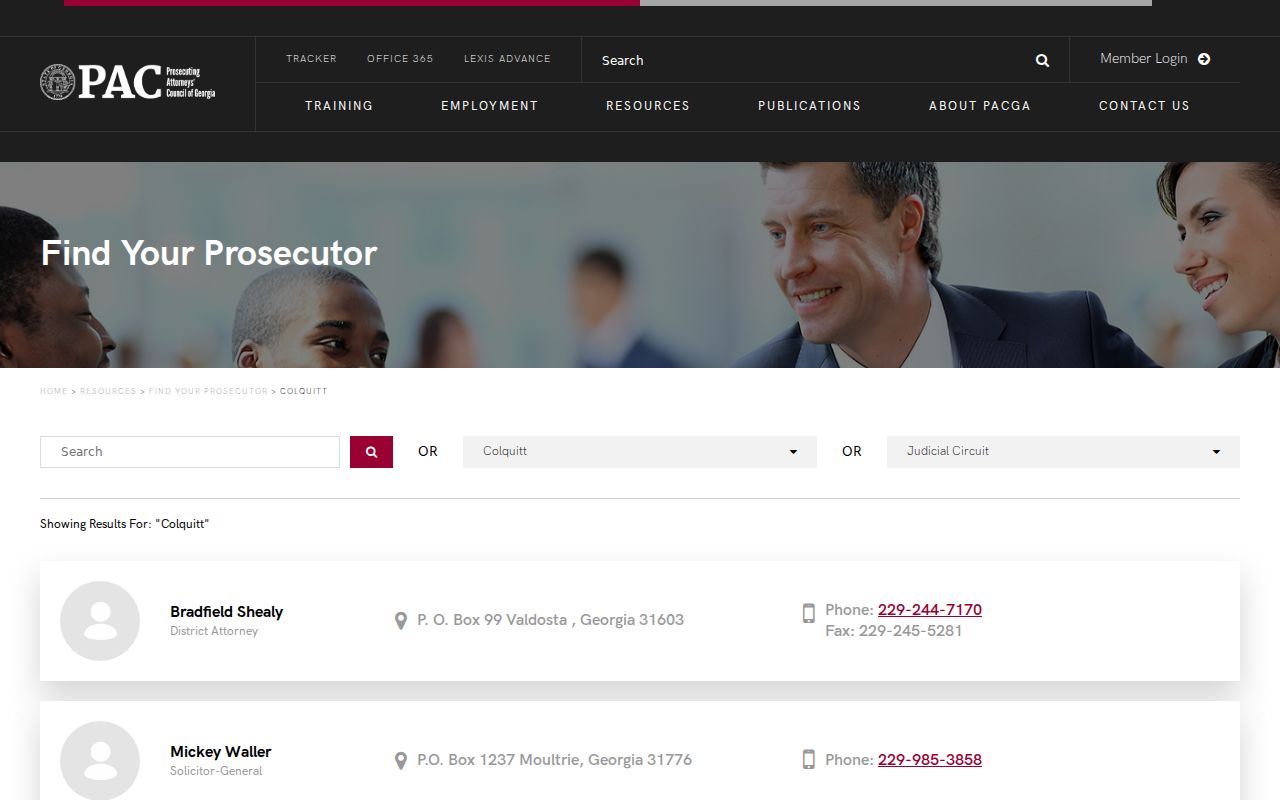
For copies, docket entries, and certified outcomes, contact the clerk. For questions about what was filed or a record-restriction decision, the responsible prosecutor may be the correct next office.
Access Rules for Colquitt Case Records
Uniform Superior Court Rule 21 begins with public access to court records unless law or a proper order limits it. A restriction order must identify the affected material, its nature and duration, and the reason. Protected identifiers are redacted. Juvenile, sealed, restricted, victim-related, and legally exempt material may not appear in a portal or public copy.
Online absence is not proof that no Colquitt County criminal case exists. Call the clerk at 229-616-7420 and ask whether the file is archived, paper-only, under restricted access, or held by another court. The counter is open from 8:00 a.m. to 5:00 p.m. Monday through Friday, except major holidays. No local criminal-copy price is published, so request the current plain-copy or certification charge before ordering.