
Colquitt County Sex Offender Checks
The official starting point is the Georgia Sex Offender Registry public search. It draws from information supplied by county sheriffs, the Georgia Department of Corrections, the State Board of Pardons and Paroles, and agencies handling qualifying moves from outside Georgia. The Colquitt County sheriff is the key local verifier because the sheriff receives registrations and address changes from people residing or sleeping in the county.
Use the state tool for Georgia detail and the Dru Sjodin National Sex Offender Public Website for a cross-state check. The two searches answer different geographic questions. A national result should be followed to the source jurisdiction, while a Georgia result should be checked against the live GBI profile and, when an address seems wrong, confirmed with the sheriff.
Colquitt Registry Data Updates
Registry information moves through a local-to-state chain. Georgia requires sheriffs to submit changes within two business days, and GBI says the central registry updates daily. A recent move may therefore reach the public system after the registrant reports it and the sheriff transmits the change. This timing explains why a screenshot or saved result can age quickly.
The GBI registry landing page also provides a downloadable current data file and a bi-monthly report. Those resources add broad context, but the live search remains the practical way to review a current Colquitt County profile. GBI makes efforts toward complete, accurate data while warning that contributing agencies supply the information.
The official registry landing page is shown in the captured source image below.
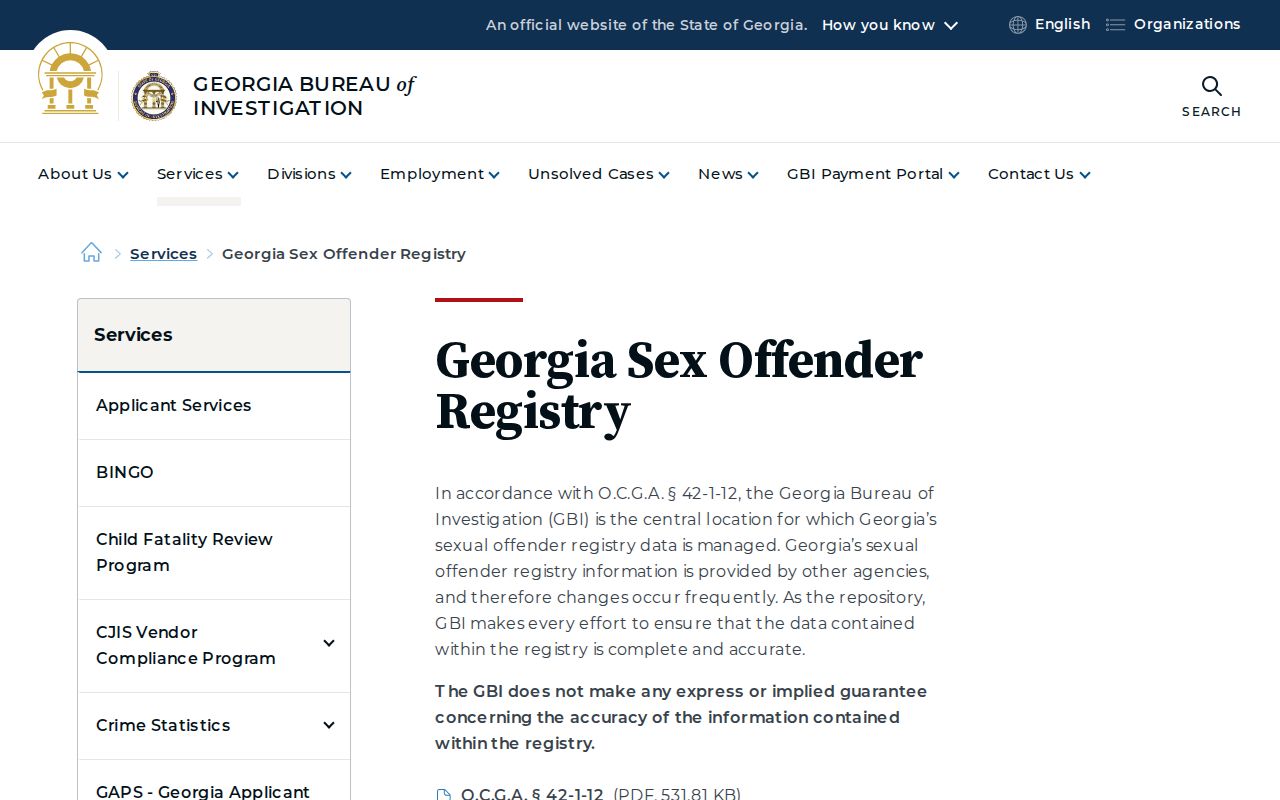
That page connects readers to the public search and explains the state repository role.
Georgia Registry Searches
Open the official SORT application rather than a commercial people-search service. GBI confirms that name and county are search inputs. The inspection research could not verify the live portal's exact radius options, result cap, sorting controls, or button labels, so those details should be read directly from the current screen instead of assumed.
- Open the Georgia public registry and review its current conditions of use.
- Enter the best confirmed name information and choose Colquitt County when the county is known.
- Compare the result list carefully and avoid deciding identity from a shared name alone.
- Open the matching profile, read its status and registered details, then verify urgent concerns with law enforcement.
| Search element | Type | Required | Research finding |
|---|---|---|---|
| Name | Text | Unspecified | Confirmed by the GBI FAQ |
| County | Selection | Unspecified | Choose Colquitt County when applicable |
| Address or proximity | Portal control | Unverified | Read the live portal for current formats |
| Search and reset | Buttons | Unverified | Labels were not machine-readable |
The manifest capture of the SORT public search documents the official interface.
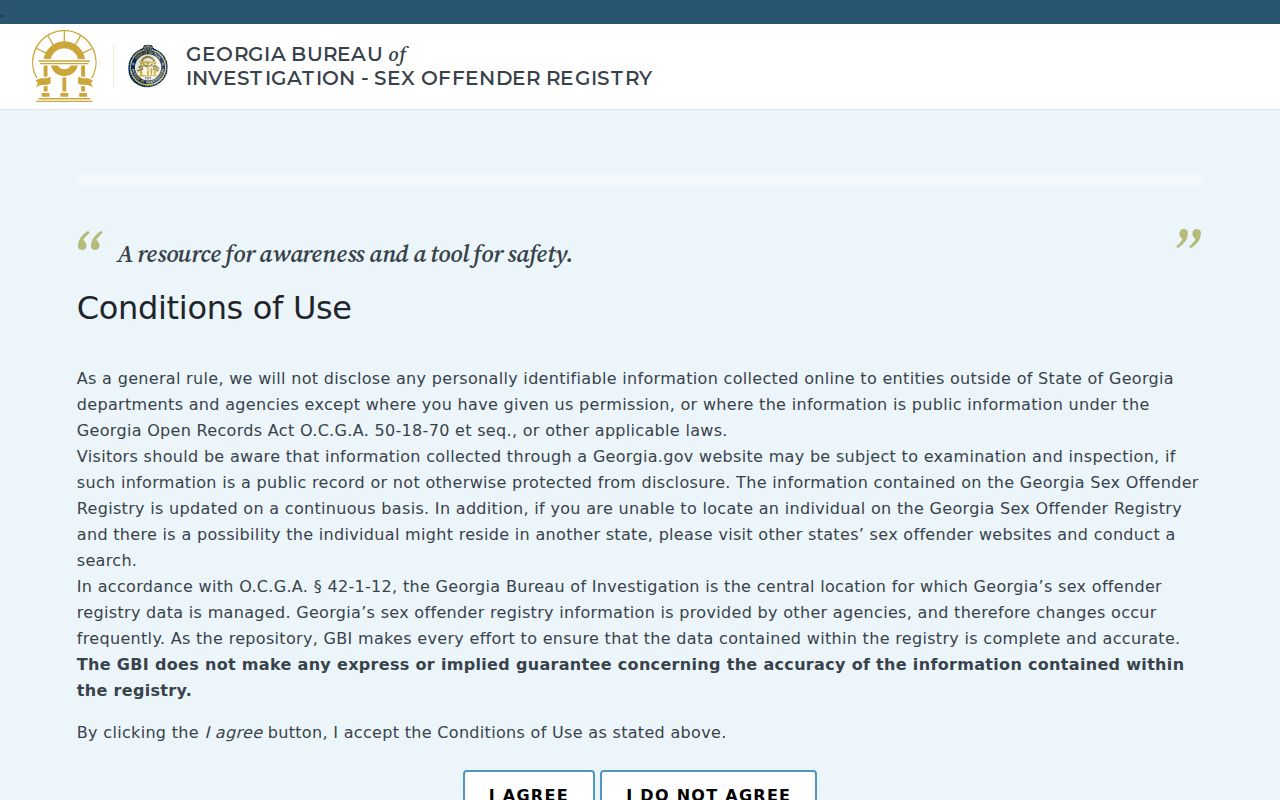
Always rely on the live fields because the state can revise the interface.
When No Colquitt Result Appears
No result is not a universal safety finding. The GBI registry FAQ lists several reasons a person may not appear: the person may be deceased and removed, may not meet Georgia's statutory criteria, may have a new registration not yet submitted, may have completed a qualifying First Offender sentence, or may have been searched under the wrong name or county.
Repeat the lookup with corrected facts. Search the national portal if another state may be involved. For an apparently wrong Colquitt County address or suspected noncompliance, contact the sheriff rather than approaching anyone. The FAQ capture below supports the birthday reporting and missing-result rules.
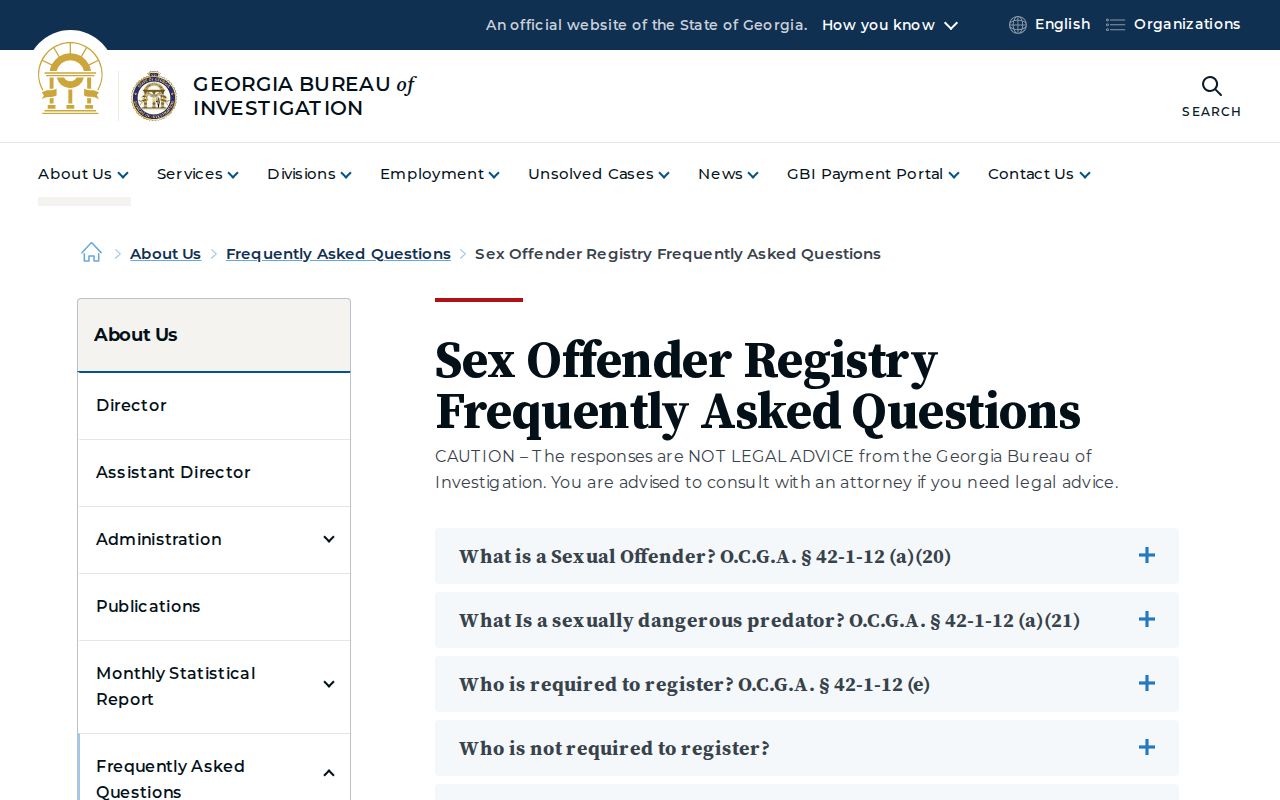
This fallback chain keeps a search grounded in official records and direct verification.
Registry Profiles: What They Show
A Georgia registry profile can connect a person to registered facts that are much more useful than a bare name. The research inventory includes aliases, photograph and physical descriptors, registered residence or sleeping-location information, county, compliance status, risk classification, qualifying offense information, and other registered details. Because the public profile can change, check the live display before assuming every listed field is present or in a fixed order.
| Name and aliases | Identity names recorded for the registry entry. |
|---|---|
| Photo and description | Photo plus physical traits used to distinguish people with similar names. |
| Registered location | Residence or sleeping-location data displayed under current law. |
| Offense information | Qualifying offense, jurisdiction, statute, and conviction date where shown. |
| Georgia classification | Level I, Level II, or Sexually Dangerous Predator assessment. |
| Status | Compliance and registration information shown by the current profile. |
Read the profile as a registry record, not as a complete court file. For pleadings, disposition language, and sentencing detail, the originating court remains the better source.
Annual Colquitt Sheriff Verification
Covered people generally register in person with the sheriff of the county where they reside within 72 hours after release, placement on parole, supervised release or probation, or entry into Georgia. A person experiencing homelessness registers in the county where the person sleeps and supplies the sleeping location. Most changes must also be reported within 72 hours.
Annual renewal occurs in person within the 72 hours before the registrant's birthday. The process includes a new photograph and fingerprints. Residence moves require advance notice to the former and new sheriff, while changes to a homeless sleeping location have their own 72-hour reporting duty. These local check-ins are why the Colquitt County sheriff is the right office for a suspected inaccurate address.
Note: Call the sheriff at 229-616-7430 before visiting to confirm the office entrance and the right registration contact.
Registration Levels and Duties in Georgia
Georgia's classifications are risk assessments, not federal duration tiers. The Sexual Offender Registration Review Board evaluates the chance of another crime against a minor or another dangerous sexual offense and assigns Level I, Level II, or Sexually Dangerous Predator status under O.C.G.A. § 42-1-14. Registration is generally for life, excluding incarceration, unless a court or another legal mechanism grants release under state law.
| Georgia classification | Meaning | Registration consequence |
|---|---|---|
| Level I | SORRB risk assessment | Generally lifetime registration and annual birthday verification |
| Level II | SORRB risk assessment | Generally lifetime registration and annual birthday verification |
| Sexually Dangerous Predator | Highest statutory classification | Generally lifetime registration, GPS monitoring, annual and six-month verification |
The official classification source is preserved in the manifest image below.
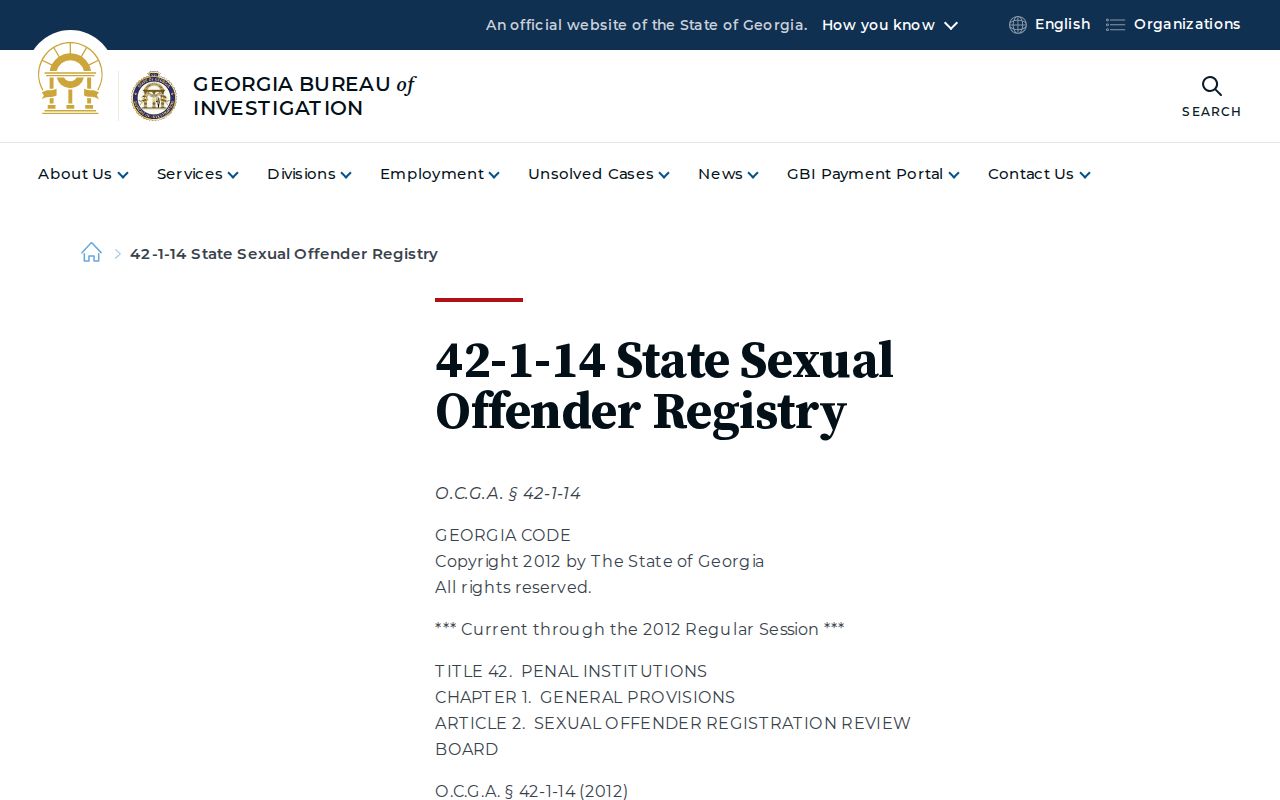
It helps prevent the common error of substituting a generic 10-year or 25-year tier chart for Georgia law.
Colquitt Location Rule Limits
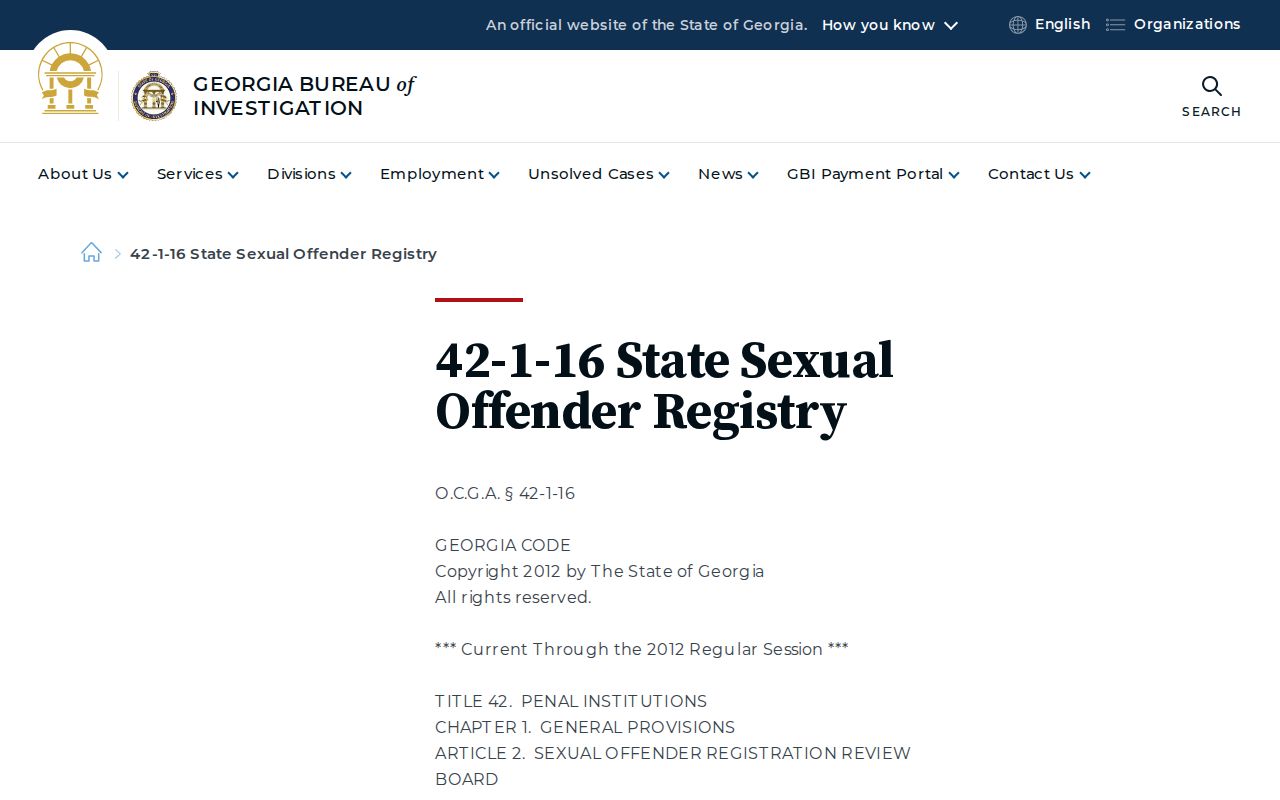
Georgia's 1,000-foot residence restriction is date- and fact-sensitive. The official reproduction of O.C.G.A. § 42-1-16 addresses specified people and protected locations, along with timing exceptions tied to ownership or leases and proof requirements. It should not be restated as a blanket claim that every person listed is barred from every school, park, or child-care site.
The captured statute source provides the detailed restriction framework.
Current statutory text and sheriff guidance control when a particular address raises a question.
National and Colquitt Search Layers
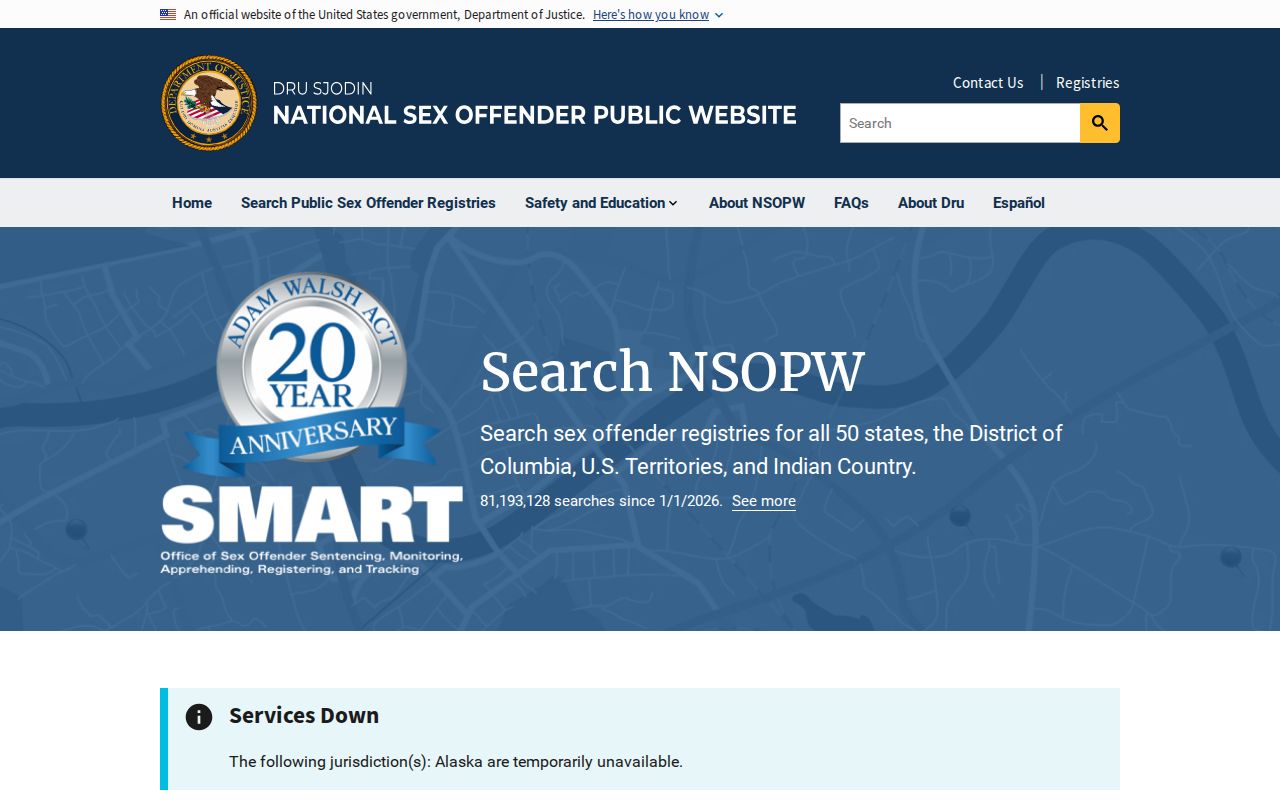
NSOPW links public registry information from participating jurisdictions across the country. It is useful when a person moved, an address sits near a state line, or the relevant jurisdiction is uncertain. It does not replace the Georgia source. Follow a national match to the agency that maintains the underlying entry and use that source's definitions.
The national registry search is represented by the final assigned capture.
Using both layers reduces the chance that an incorrect county assumption ends the inquiry too soon.
Using Registry Information Lawfully
Registry information supports personal, family, and community safety. It is not evidence that a person is engaged in current unlawful conduct. Check the source date, confirm identity, and report suspected noncompliance to the Colquitt County Sheriff's Office. Do not confront the person or household.
Failure to register or knowingly supplying false registration information can lead to felony penalties under Georgia law. Harboring or concealing a noncompliant registrant, or knowingly helping that person evade law enforcement with false information, also carries serious consequences. Those rules belong with trained law enforcement and courts, not private enforcement.
Use the registry lawfully: Threats, harassment, intimidation, discrimination, or vigilantism based on registry information are forbidden. Report a concern to law enforcement instead of acting on it.
Note: A registry entry is a public-safety record, not permission to interfere with a registrant, relatives, neighbors, property, or lawful activity.